Museum Guide News
Museum Guide News

At the Richard I. Bong Museum, experience “Marge,” our beautifully restored P-38 Lightning, stand beside our M60 tank, and enjoy the scenic hiking trail just beyond our grounds. Step into history and immerse yourself in powerful, firsthand accounts from veterans spanning World War II to today.
The Real Top Gun- Born in Superior, Wisconsin, Dick Bong rose to national prominence as America’s greatest fighter ace. During World War II, he shot down 40 enemy aircraft in the Pacific Theater, securing his place in history. Discover the life, courage, and legacy of this remarkable young man.
Plan Your Visit- Join us for guided or self-guided tours and connect with the history that shaped our world. Walk with heroes—visit today. More than a museum, we are a living tribute to those who served, both on the front lines and the home front. Meet our volunteers, hear their stories, and leave inspired.
We host a variety of veteran-focused programs throughout the year, including a Boundary Waters retreat, the service of over 300 Thanksgiving meals annually, and commemorative events for major military holidays. Our outreach extends into the community through veteran-led presentations and demonstrations at schools and organizations. Our educational programs welcome students from across northern Wisconsin and Minnesota, offering hands-on learning through authentic artifacts and direct engagement with veteran experiences. When schools can’t come to us, we bring history to them.
Beyond our local impact, we are committed to a global mission. Mission Marge, launched in 2024, began as an effort to locate Dick Bong’s P-38, “Marge,” which crashed in Papua New Guinea. Since discovering the site, we have worked to honor its historical significance while expanding humanitarian efforts in nearby communities. We look forward to welcoming you any time of the year! https://bongcenter.org/

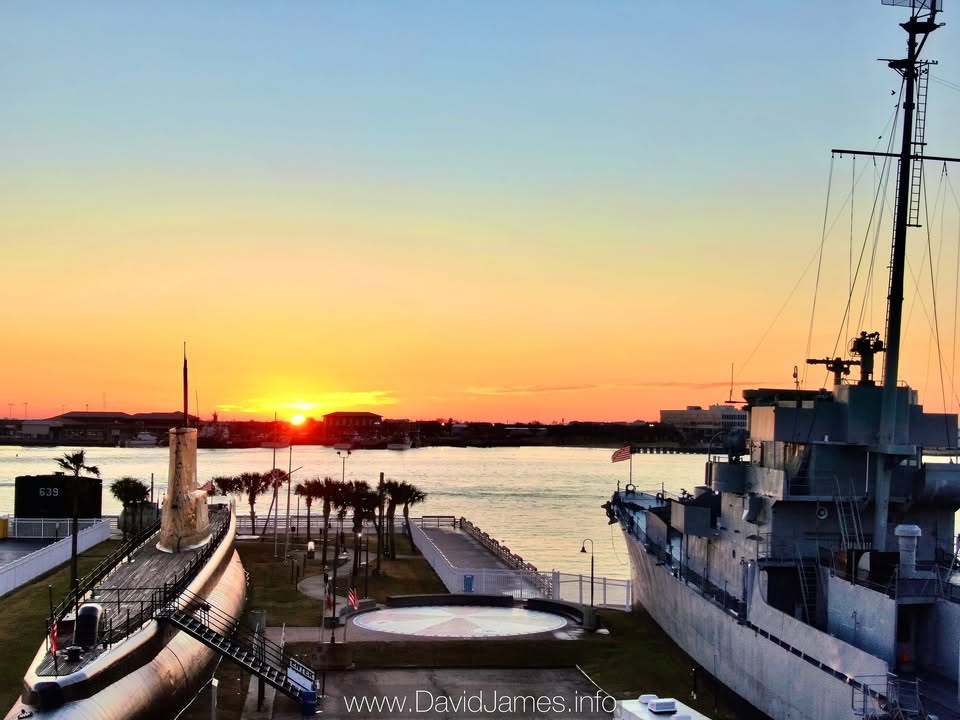
Since 1999, the Cavalla Historical Foundation assumed oversight of the Galveston Naval Museum and its mission to restore, maintain and operate USS Cavalla, USS Stewart, the sail of the USS Tautog (SSN-639) and the conning tower of the USS Carp (SS-338).
The Galveston Naval Museum, rich in history houses a captivating artifact collection, featuring restored vessels, vintage products and machinery, and weaponry. Each item tells a story of naval history, taking visitors on a journey through time, honoring bravery and ingenuity of sailors.
Step into the annals of history at the Galveston Naval Museum. Nestled in the heart of this vibrant coastal city, our historic venue offers a unique and captivating setting for your special event as well. Hosting your gathering amidst the backdrop of beautifully preserved naval vessels pays tribute to the historical sacrifices that allow us to be here today. The sea breeze and stunning views further enhance the ambiance, reminding us of the resilience and dedication that have shaped our world. Whether it's a corporate function, a special celebration, or a memorable gathering, our team is dedicated to ensuring your event is truly exceptional. Join us at the Galveston Naval Museum, where history comes alive, providing the perfect backdrop for timeless memories.
We also offer sleep overs! Sleep in the same quarters where sailors bunked 75 years ago aboard the USS Stewart. Come take an exclusive private tour and learn the science of ships, the importance of preservation and the heritage of our nation’s military. Complete your assigned mission and become an honorary ensign.
The Museum is COMMEMORATING 100 YEARS OF HONORING VETERANS! In 1919, President Wilson marked the first celebration of Armistice Day, making it a National Holiday. Honor your favorite Veteran this year by making a $25 donation in their name by clicking the button below. The Veteran's name will appear on our Veteran Honor Roll. https://www.galvestonnavalmuseum.com/veterans
So, when you’re in Galveston or in the area check us out and all we have to offer our patrons – “From harm’s way to historic” you don’t want to miss the history we display in our museum! We're open every day from 9am - 6pm: (409) 770-3196 https://www.galvestonnavalmuseum.com/
Museum Address: 100 Seawolf Parkway, Galveston, Texas
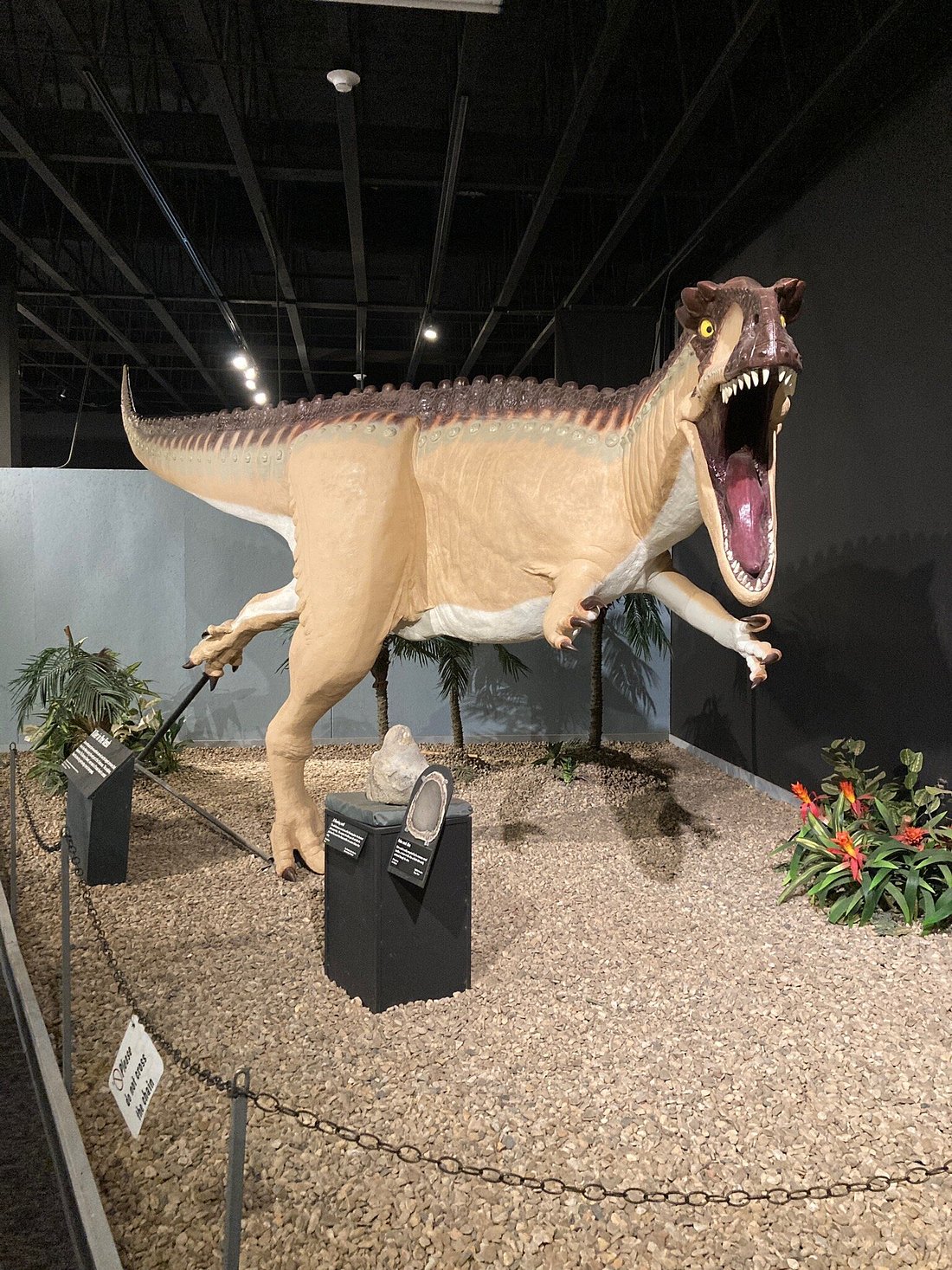
Mesalands Community College’s Dinosaur Museum and Natural Sciences Laboratory opened to the public in May of 2000.
The Museum receives approximately 5,000 visitors each year and our guests represent all 50 states and over 40 foreign countries. Guests to the Museum return year after year to see the changes, improvements, and new exhibits that our staff is continually planning and completing.
The Exhibit Hall at the Mesalands Community College’s Dinosaur Museum houses a host of replicated and original fossils from tiny footprint casts to the 40′ long skeleton Torvosaurus, a rare carnivore relative of Tyrannosaurus rex which hails from the Jurassic period.
The Museum’s focus is on the Mesozoic period, which is also known as ‘The Age of Dinosaurs.’ The Mesozoic is comprised of the Triassic, Jurassic and Cretaceous periods. The museum cultivates specimens from exclusive local dig sites. Guests are able to view Paleontology students and the curator preserve specimens through a viewing window located in the exhibit hall. Witness history as it’s uncovered and assembled in the laboratory.
The museum also boasts an impressive collection of minerals from all over the world. These are displayed in the exhibit hall and sold in the gift shop.
We welcome you to learn more about our Dinosaur Museum and Mesalands Community College, by clicking our website! https://www.mesalands.edu/community/dinosaur-museum/
Mesalands Community College’s Dinosaur Museum222 East Laughlin Street - Tucumcari, NM - (575) 461-6627
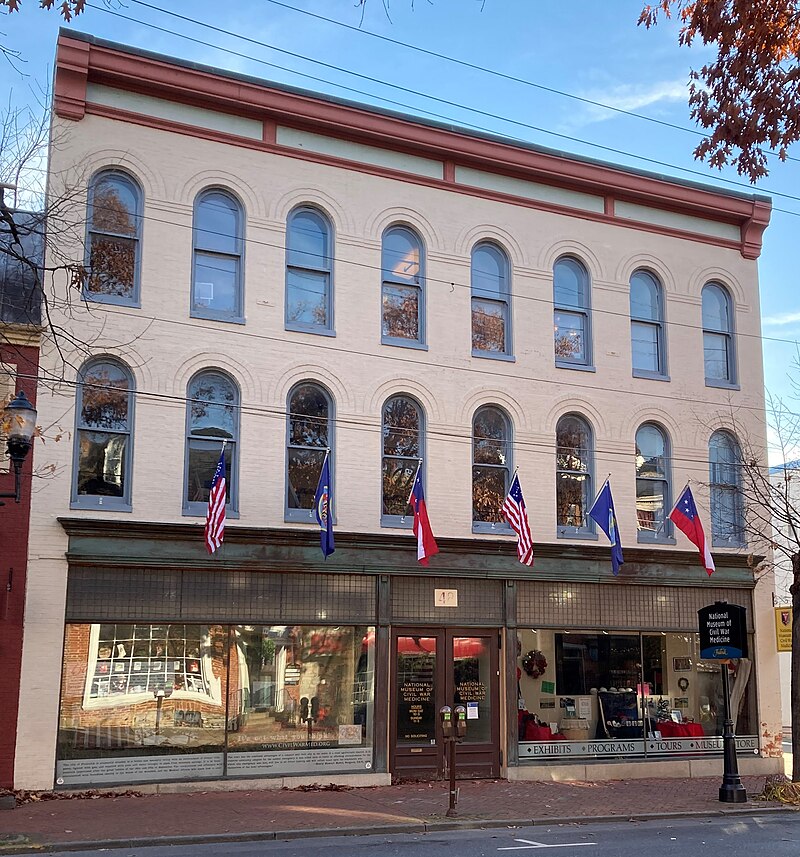
The National Museum of Civil War Medicine, located in the heart of historic downtown Frederick, Maryland, is just one of three different museums operated under the same umbrella.
In Frederick at the main Museum, visitors will learn how the innovation of Civil War medicine impacts the present day. The Clara Barton Missing Soldiers Office Museum, located in Northwest Washington, DC, is the wartime home of Clara Barton. From her boardinghouse, she brought medical supplies to the front lines during the Civil War and led the search for missing soldiers after the conflict. The Pry House Field Hospital Museum is located on Antietam National Battlefield. Visitors to the Pry House can see an original Civil War field hospital, the civilian impact of Civil War battles, and the site of one of America’s medical turning points.
Explore downtown Frederick’s storied past with our signature walking tours. Every Saturday and Sunday from April – September, walking tours of Frederick’s hospital sites will be available at 10:30 a.m. on Saturdays and 2:00 p.m. on Sundays. Walking tours last for an hour to an hour and a half. With accounts taken from the diaries and letters of the surgeons, soldiers, and civilians who were there, this guided walking tour will explore the locations of the city’s Civil War hospitals in churches, schools, and public buildings. This program is an excellent way to take in downtown Frederick as many of those same buildings still make up the historic district today.
Throughout the American Civil War, Frederick, Md., played a vital role for both Union and Confederate armies. Soldiers marched beneath the “Clustered Spires” on their way to battles at Antietam, Gettysburg, and Monocacy. The “One Vast Hospital” tour focuses on the wreckage left behind.
At any given time, the National Museum of Civil War Medicine can display a small fraction of the 5,000+ artifacts in our collection. The “Artifacts Revealed” series highlights objects from the collection that are rarely on display. Beyond offering a special glimpse of our artifacts, the videos offer a snapshot of the exciting, interesting, and unusual stories we tell at the museum. For example, most people never consider that brain surgery was even attempted during the Civil War, but the video focused on the trephine changes that perception in a little more than one minute. Changing perceptions, whether in the museum or online, can easily lead them to further discoveries about how Civil War medicine changed the world.
We encourage you to visit our museum and see our collection, that in ways would have been unimaginable only a few years ago. The museum has been tasked with stewardship of these priceless artifacts and we utilize them to tell the story of medical care in our nation’s bloodiest conflict. “Artifacts Revealed” represent our latest, evolving efforts to tell an important national story through digital means and encourage visitors to trek to the “Crossroads of War” – Frederick, Maryland.
We look forward to seeing you this year – check us out online for more information: https://www.civilwarmed.org/
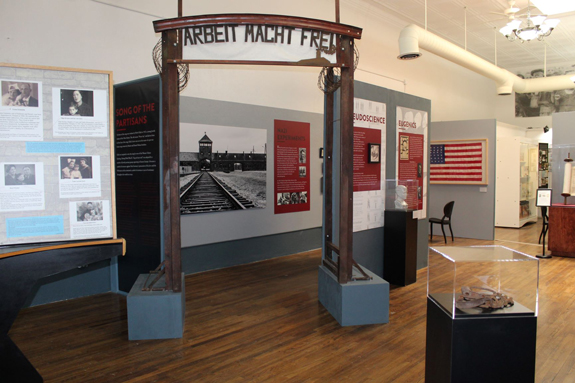
The New Mexico Holocaust & Intolerance Museum and Gellert Center for Education uses lessons and personal stories of the Holocaust and other genocides to educate and inspire communities of upstanders. This unique museum experience reinforces the idea that every single one of us can make a positive difference.
Located in the heart of downtown Albuquerque, the New Mexico Holocaust & Intolerance Museum provides a unique educational experience for visitors from around the world. The only museum of its type in the state, it opened in January of 2001. The institution was founded by Werner Gellert, a Holocaust survivor, his wife, Frankie, and Juliana K. Lerner, also a Holocaust survivor. Their intent was to show--along with the Holocaust--genocides and other instances of organized hate in the hopes that such atrocities might never happen again. We embody that mission through our exhibits which describe hate groups in America, propaganda, the Armenian genocide, the Chinese exclusion Act, colonization as it affected Native Americans, and the African-American experience. Our collections include a diverse array of unique artifacts, including the Flossenbürg Flag, a replica of the United States flag made by prisoners of the Flossenbürg concentration camp to welcome their liberators.
In keeping with our focus on education and outreach, we revived school visits which had been suspended due to COVID. Recently, nearly 200 middle and high school students were welcomed at the museum. After a guided tour of the exhibits, they had the incredible opportunity to hear the story of a local Holocaust survivor who was a hidden child. By studying the Holocaust, these youngsters learned about historical consequences of prejudice, hate, and intolerance, and how to combat these forces in their own lives. They learned what it means to be an upstander rather than a bystander.
The New Mexico Holocaust & Intolerance Museum is a one-of-a-kind highlight to any Albuquerque vacation. Visit us to learn what you can do to prevent hate and intolerance and make our world a better, more equal place for all! 505-247-0606 https://nmholocaustmuseum.org/
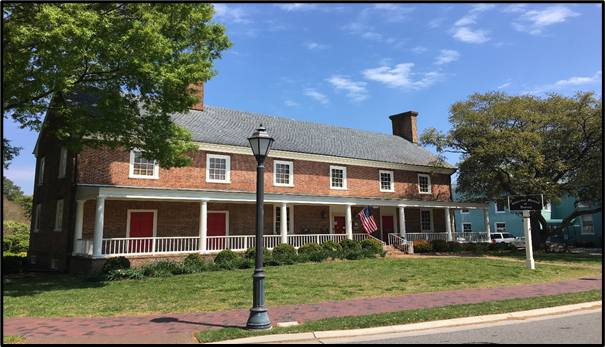
Celebrate Gloucester’s 375th and America’s 250th at the Museum of History! W. Robert Kelly, Jr., Historic Resources Supervisor Gloucester County Parks, Recreation & Tourism.
Throughout 2026, Gloucester County, Virginia, proudly celebrates two milestones: the nation’s 250th anniversary and the county’s 375th birthday. Established in 1651, Gloucester stands among America’s oldest counties, with a history as complex as it is inspiring. That story comes to life at the Gloucester Museum of History. Housed within a tavern constructed in 1770, the Museum is located on Main Street in the heart of picturesque Gloucester Courthouse.
Visitors of all ages can explore the county’s past through engaging exhibitions, artifacts, and interactive experiences that connect Gloucester to national stories of innovation, heroism, and sacrifice.
In late 2025, the Museum unveiled a $130,000 exhibit to mark the 250 and 375th commemorations. Located on the second floor, believed to have once been the tavern’s ballroom, the new exhibit features engaging images, artifacts, and interactives, while showcasing the ballroom’s original 18th-century hardwood floors and window trim that evoke the ambiance of Colonial Williamsburg.
Among the Museum’s most inspiring exhibits is Awakening: The Life & Legacy of T.C. Walker, which chronicles the journey of Gloucester’s first African American lawyer. Other visitor favorites include The Art of Carving: The Decoys of William McKinley Smith, featuring twenty-five hand-carved duck decoys, and Commerce Meets Community: Gloucester’s Country Stores, which brings the past to life with over fifty artifacts and several 120-year-old ledger books. An exhibit also shares the story of the 1781 Battle of the Hook, the largest cavalry battle of the American Revolution and key allied victory that contributed to the surrender at Yorktown.
The Museum and nearby Courtcircle offer a complete experience. Guests can explore historic buildings, including the 1766 Courthouse, one of the oldest in Virginia. The Museum is open Monday through Saturday, 11 a.m. to 3 p.m., and admission is free. https://gloucesterva.gov/museum-of-history
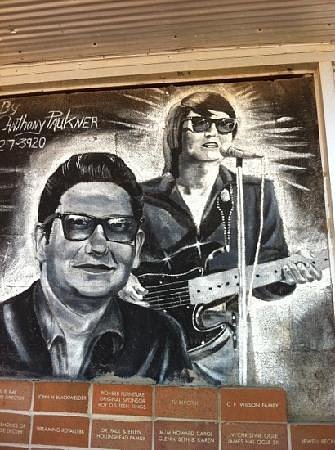
The Roy Orbison Museum is a small museum dedicated to rock-n-roll legend and singer-songwriter Roy Orbison, who lived in Wink, TX as a child and performed with various country-western bands during the 1950s before heading on to pop stardom.
The Museum was formed in 1989 by volunteers of Wink to pay tribute to a favorite former resident of this small oil field town, Roy Orbison after his death in December 1988. The museum houses memorabilia from all over the world courtesy of his many fans.
While Wink, TX is very small, it attracts visitors from many countries around the world to visit the museum. Wink will celebrate their Centennial on May 9th, 2026, which promises to be a wonderful celebrations!
When ready to visit us, contact Barbara at 432-999-8838 and to learn more online at: https://texastimetravel.com/directory/roy-orbison-museum/ The museum is free, but donations are always welcome! Our FB page: https://texastimetravel.com/directory/roy-orbison-museum/
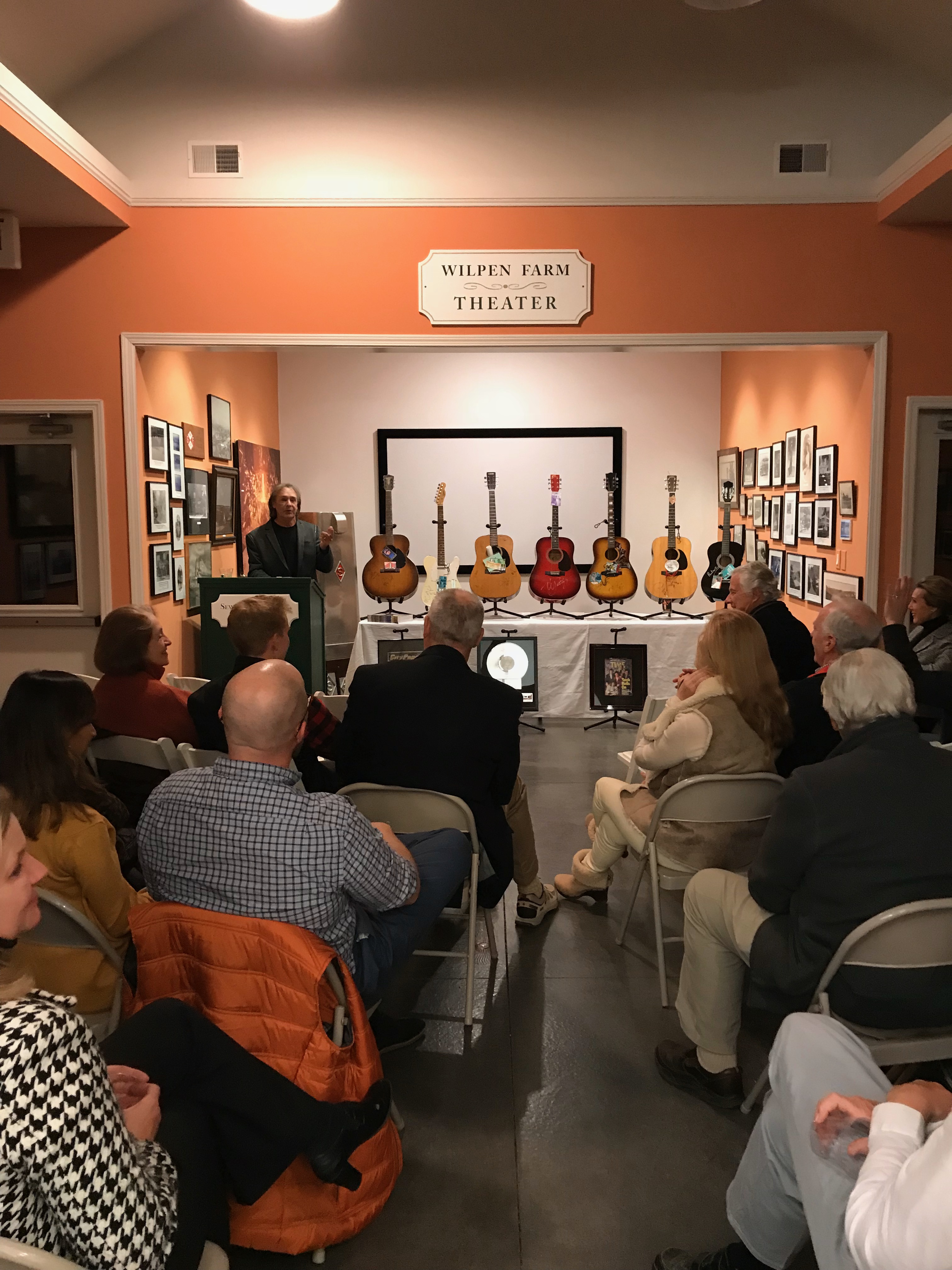
The Sewickley Heights History Center, located in the heart of Sewickley Heights, Pennsylvania, is a nonprofit, non‑endowed museum dedicated to preserving the natural beauty and historical integrity of the region.
For more than 20 years, the museum has served the community by offering visitors an opportunity to step back into the late 1800s through the 1930s, a period marked by the height of the American Industrial Revolution.
During this era, many of Pittsburgh’s prominent steel industrialists established their homes in Sewickley Heights, building grand estates across its rolling hills. The museum showcases this rich heritage through its collection of memorabilia, brass-era vehicles, horse‑drawn carriages, and historic photographs. The onsite theater features a variety of informative short films produced in-house, further bringing the area’s history to life.
The History Center also offers guided tours, educational lectures, live music events, and rental opportunities for the public, continuing its commitment to community engagement and historical preservation. Check us out online: https://sewickleyheightshistory.org/
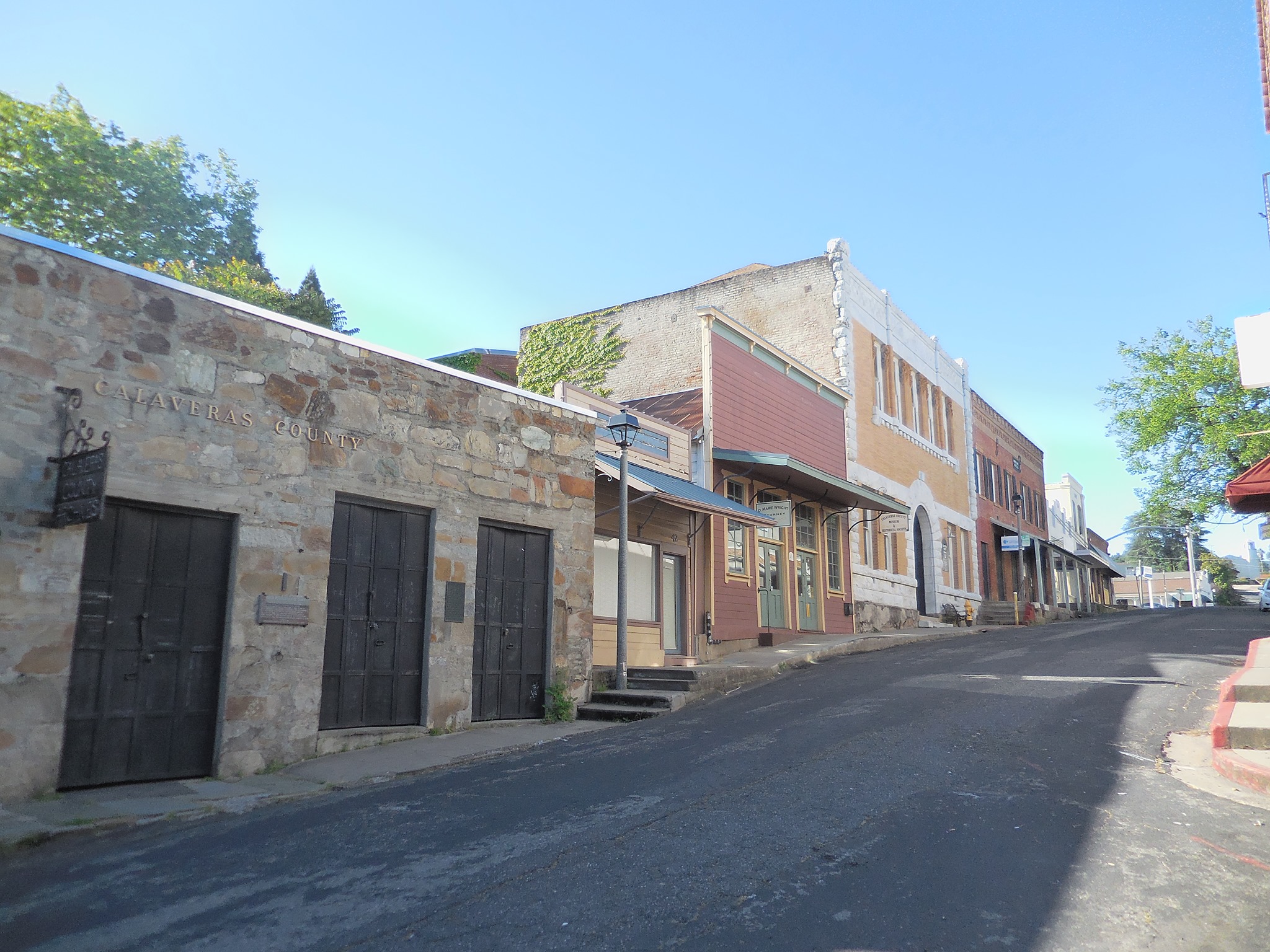
The Calaveras County Historical Society in San Andreas, CA was formed in 1952!
The historical society is a record of past events. Many counties in the State of California have their past events preserved in a written history of the county. This is not true of the county of Calaveras as its history has never been written.
Located in the center of the gold mining district of California, Calaveras is rich in history, tradition, romance, and lore. The early growth and development of the State of California mostly took place in the gold mining districts and Calaveras County contributed its full share. Many persons who later became leaders in the state at one time became gold miners in Calaveras County.
Many descendants of the early residents of Calaveras County are still living, and it is possible to collect from them a vast fund of early history of the county. Many of the issues of early newspapers are no longer in existence, but some of these early newspapers are available in museums and public libraries.
While visiting come see the Calaveras County Museum Complex, which is made up of three historic buildings: The Old Courthouse and Jail - 1867, The Hall of Records - 1893, and The Odd Fellows Hall - 1856. Within these interconnected buildings, the history of Calaveras County is told through objects, portraits, and photographs. Here you will find educational displays that tell the County's pre-history and Tribal culture, the stories of the early-pioneers, and the history of the Gold Rush encompassing the influence of European, Chinese, Mexican and many other cultures and their stories and objects related to mining and other industries in the County. https://www.historicalcalaveras.com/downtown-museum
The prime purpose of the Calaveras County Historical Society is to collect and preserve for posterity the early history of Calaveras County. We invite you to come and visit us anytime where you will see history preserved form years past! Check us out online: https://www.historicalcalaveras.com/
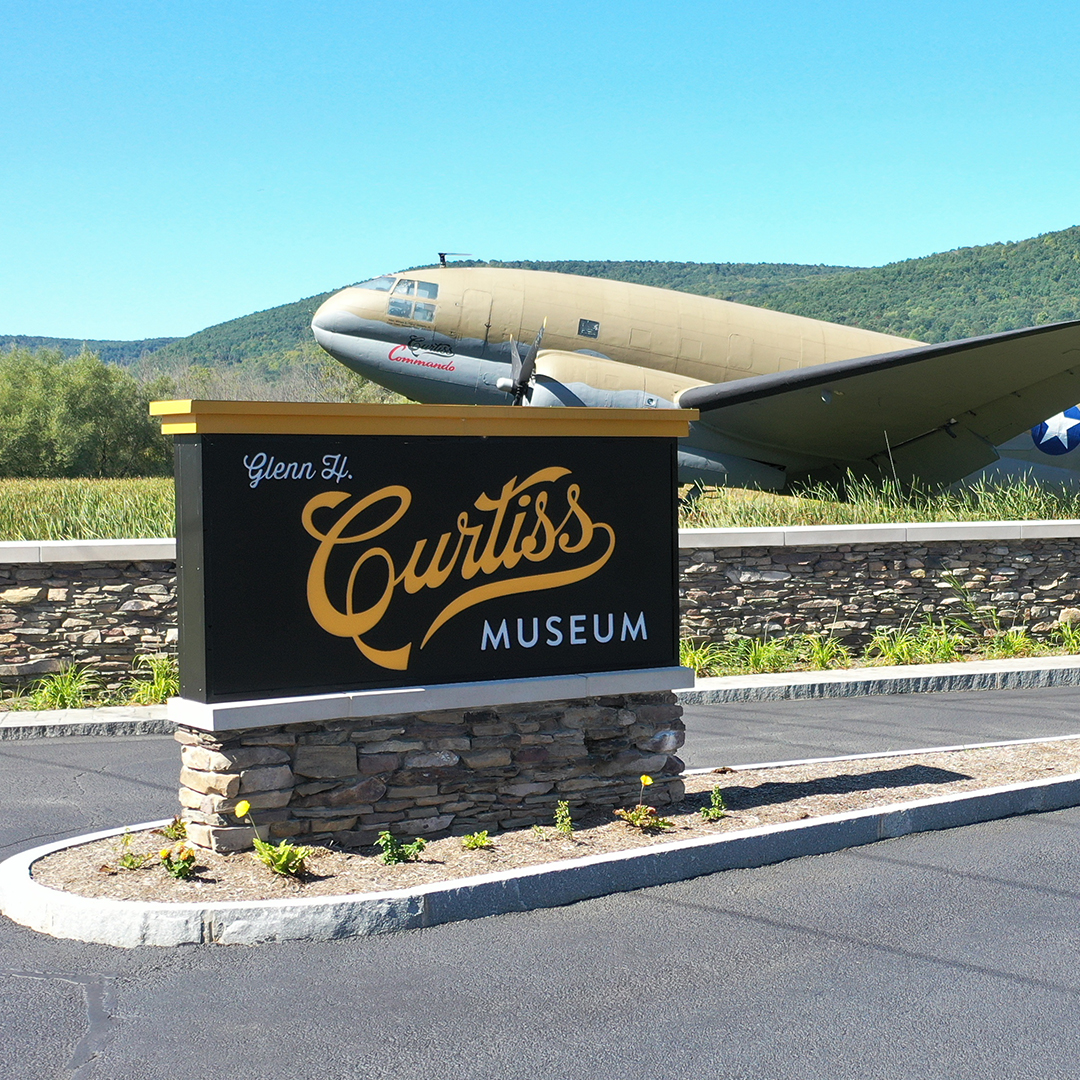
The Glenn H. Curtiss Museum, in Hammondsport, NY bears the name of a pioneer aviator and Hammondsport’s favorite son!
The museum is located on State Route 54, one half mile south of the village of Hammondsport, New York. Dedicated to the memory of Glenn Hammond Curtiss, the museum contains a priceless collection relating to early aviation and regional history. The museum also features a 75-seat theater, large open area for special events and a museum store. In addition to seeing the museum displays and exhibits, visitors are welcome to visit the Restoration Shop, talk with volunteer craftsman and watch them work on historic aircraft.
The Glenn H. Curtiss Museum is an educational and cultural institution that collects, preserves, and interprets transportation modes and regional history, and celebrates the innovations and accomplishments of Glenn Hammond Curtiss.
In the beginning for Glenn H. Curtiss, building and selling airplanes was not enough. He wanted people to understand the idea and beauty of flying his aircraft. Starting with the first sale of an airplane to the Aeronautical Society of New York in 1909, he agreed to teach two of its members, Charles Willard and Alexander Williams, how to fly.
By 1916, people from all walks of life were attending the Curtis School in one of ten locations across the country! He first trained U.S. Navy pilots, helping to create a strong Air Wing of the military. With the outbreak of World War I in 1914, many of the schools and instructors would become extensions of the military. These flying schools trained some of the finest aviators the world had ever seen. Afterwards, the Curtiss Flying Schools merged into the Curtiss Flying Service, continuing well up to the beginning of World War II.
Today, the Museum is dedicated to preserving and displaying planes, automobiles and bicycles either originals, restores or reproductions from the late 1800’s to the 1940’s. https://glennhcurtissmuseum.org/exhibits-on-display/ The Glenn H. Curtiss Museum is the perfect place to experience early history of all of this and more, covering WWI & WWII! Check out more information online - https://glennhcurtissmuseum.org/
Museum Opening Hours: May 1 – October 31st, 9am to 5pm daily. November 1 –April 30, 10am to 4pm daily **We are closed Easter, Thanksgiving, Christmas Eve, Christmas Day, New Year’s Day.