Museum Guide

Select from Pulldown
Museum Guide News

In WHITTIER, AK, an important part of Alaskan history is now back in Alaska.
The Prince William Sound Museum in Whittier, AK has accepted a 1939 Japanese machine gun — called a Nambu — used by Japanese military forces in the World War II Battle of Attu along the Aleutian Islands. Museum Director Ted Spencer said having the gun displayed at the military museum was a lifelong dream, but getting it there was quite a journey.
It started with Lt. Colonel William Lucas, who led the charge to recapture Attu from the Japanese in 1943, earning a silver star in the process. The battle itself was bloody; the museum has the names of more than 500 American soldiers who died in the only World War II land battle to be fought on the North American continent. The Americans prevailed and the Japanese retreated, leaving some of their weapons behind. That, Spencer said, was how Lucas got the gun. It went with him to his home in Virginia where it stayed in a closet for nearly 80 years until it was eventually passed down to a granddaughter. “So, she contacted us and said, ‘Hey, would you like to have this gun for display?’ And of course, it was a big dream for me to have something from the battle of Attu,” Spencer said.
But there were complications; because the machine gun had never been registered with the federal government, the Bureau of Alcohol, Tobacco, Firearms and Explosives wanted to melt it down. Elaina Spraker, a staffer with Sen. Dan Sullivan’s office, worked to convince the agency the gun was a historic relic. It eventually agreed to transfer ownership to the City of Whittier. Sullivan recently toured the Whittier Museum, seeing the gun for the first time in person. “To be able to have an original machine gun, [a] Japanese machine gun that was in that battle, you know we lost a lot of American service members,” Sullivan said. “To have that as a remembrance of the service and sacrifice — which is really what this museum is all about — it’s really powerful.”
Here is a video link to more information on this Japanese Machine Gun - https://www.alaskasnewssource.com/2024/08/14/wwii-japanese-machine-gun-battle-attu-is-returned-alaska/
Spencer said he hopes the gun will shed new light on a battle that many Americans are unfamiliar with. He called it an important piece of history in which Alaska played a vital role. To view and learn more about this extraordinary Japanese machine gun and other historic WWII exhibits and the role Whittier, AK played in the war, come visit the Prince William sound Museum and check us out online! https://www.pwsmuseum.org/

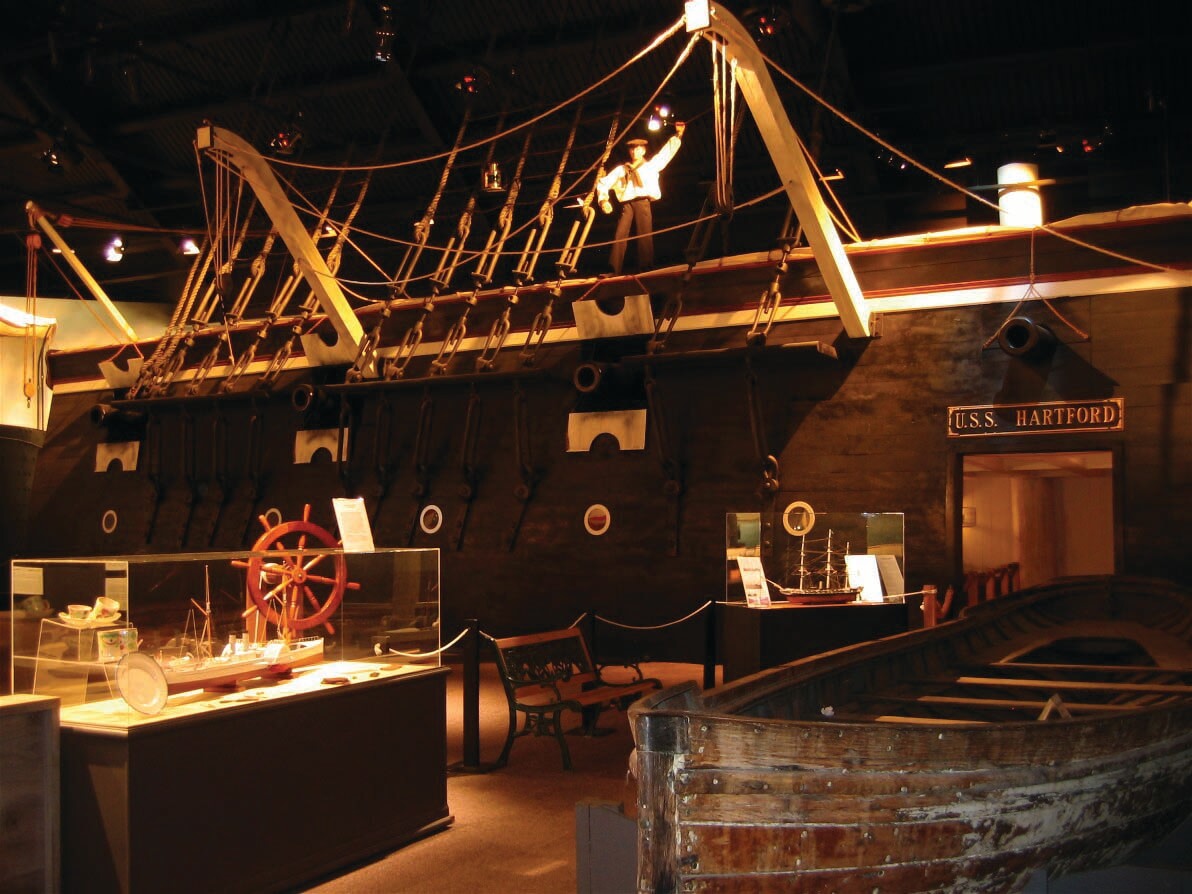
Welcome to the National Civil War Naval Museum in Columbus, Georgia, where history comes alive along the scenic Chattahoochee River.
This year, we proudly celebrate the 25th anniversary at our current location. Discover the remains of the warship, CSS Jackson, and explore our impressive collection of artifacts and immersive walkthrough exhibits, including replicas of the USS Hartford and the CSS Albemarle.
With the nation's largest array of Civil War naval-related flags, our main gallery invites you to experience this pivotal chapter in American history. We feature engaging events, lectures, tours, and live demonstrations throughout the year. https://www.portcolumbus.org/exhibits-events
When you visit us, you will want to experience one of our immersing tours. Below is a list of them to consider when coming! ForTours - Call 706-221-1782, book your group today! Group tours must be scheduled in advance. Admission included.
- VIP Tour – $75 + tax per group of up to 5 people – guided – tour time: 1 hour – Take a private guided tour of the museum and discover the unique exhibits. Your personal guide will focus the tour and discussion on the Union Navy blockade and the fledgling Confederate Navy. A great opportunity for history enthusiasts of all ages to explore the important role of the navies in the Civil War.
- Stroll the Decks – $8 + tax per person (20 minimum) – self guided – recommended tour time: 1 hour – A museum interpreter will give a brief introduction to the museum and provide background information about the navies in the Civil War. Guests will then explore the galleries at their leisure.
- A Sailor's Life – $8 + tax per person (20 minimum) – with guide – tour time: 1 hour 30 minutes – A museum interpreter will take the group through exhibits of the nation’s most unique collection of Civil War naval artifacts revealing the history of the navies at war. They will share exciting stories of battles and of the ships and Sailors who fought them. Walkthrough ship reproductions will bring to life the experience of wartime Sailors.
- African-Americans & Civil War Navies – $8 + tax per person (20 minimum) with guide – tour time: 1 hour 30 minutes – An interpreter will introduce guests to this unique museum housing an impressive collection of Civil War naval artifacts. Visitors will then be led on a tour of the museum's exhibits highlighting the African American experience with stories of Sailors and those affected by the war. The guide will answer questions and provide context about the navies in conflict.
Come visit us soon and in the meantime check out our website at: https://www.portcolumbus.org/
Museum Hours: Mon-Sat 10:00am-4:30pm and Sun 12:30pm-4:30pm - Closed New Years, Easter, Thanksgiving & Christmas

Winona County History Center: Come curious, leave inspired.
Nestled in the Minnesota Driftless region, the Winona County History Center is your chance to go behind-the-scenes with Winona County history. From the famous to the unsung, the people who lived, worked, and dreamed here helped shape this remarkable place you see today. Explore the museum at your own pace for your own unique meet-up with history!
Current Exhibits
Discover The River Gallery, a new exhibit that takes you on a centuries-long journey alongside the Mississippi River and the people who live near it and on it. Inland seas, limestone bluffs, boathouse dwellers, Indigenous communities, conservationists, and industry-builders all intersect in this Winona County river story.
The Joy of the Arts celebrates over 100 years of municipal music, and you’re sure to leave this exhibit with your toes tapping. The current exhibit features the Winona Lake Park Bandshell. One of the last of its kind, the iconic structure in the city’s public lakeside park hosted musical sensations across the years and is still a popular concert site to this day.
Landscape, wealth, and well-known architects collide in an exhibit called Stories & Structures: How Buildings Tell Us About Ourselves. From school to bank to mansion, each building has a story to tell. You’ll find out how some of the iconic structures in Winona County came to be, and what those buildings tell us about the builders and those who use and preserve them.
Coming Soon
A brand new Children’s Exhibit is coming soon to the Winona County History Center, making the museum a perfect place for people of all ages to play and participate in a bigger story. The upcoming Dakota History Exhibit will bring a fresh, honest perspective on the enduring relationship between local Dakota people and the place you know as Winona County. Exhibits on makers and inventors, veterans, homefront heroes, criminals, and crises will give you an insider view of the complex faces of the county.
Additional Attractions
Are you a museum speed-reader waiting for friends to catch up? Make yourself comfortable in the free Slaggie Family Lobby area. Refresh your soul with art exhibitions from regional creators or stroll through The Museum Shop for a piece of take-home history. Consider a stop at the information desk to make an appointment in the research archives, or set aside a time to record an oral history with a trained Winona County Historical Society interviewer.
No matter what you choose to do, you’ll leave the Winona County History Center with a new perspective on history! We look forward to welcoming you back again.
Hours: Open Daily 10am – 4pm
Phone: 507-454-2723
Website: winonahistory.org
Address:
Winona County History Center
160 Johnson Street
Winona, Minnesota